Name what enters the air
Factory processes can release dust, fumes, mists, gases and vapours. These are not interchangeable hazards. Welding fume differs from solvent vapour; an oil mist differs from a powder transferred between containers. Identify the material and any substances generated by heating, cutting, mixing or reaction. A safety data sheet is a useful starting point, but it may not describe everything created by the process or establish the actual airborne concentration.
Visible dust does not measure the respirable fraction, and an invisible contaminant can still matter. Smell is not a reliable exposure monitor or a dependable warning that a filter has reached the end of its service life. A competent assessment may require exposure monitoring, process information and review of applicable occupational limits. Include nearby workers, cleaning activities and non-routine maintenance rather than assessing only the main operator.
Control the release first
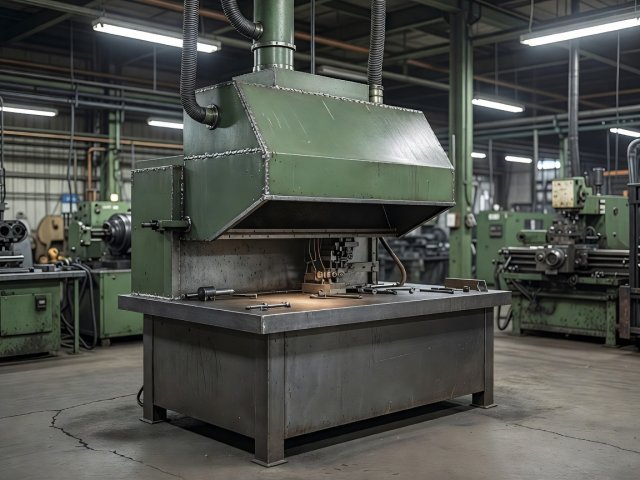
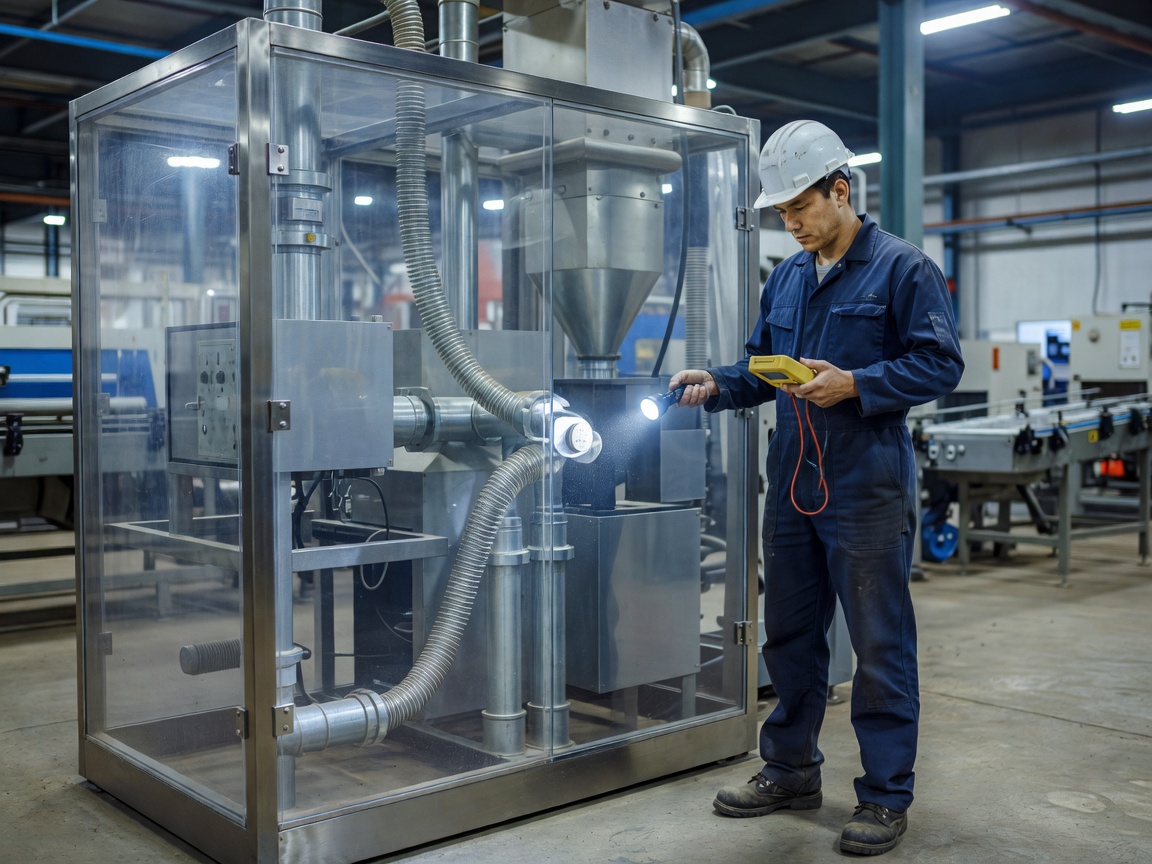
Consider eliminating the substance, substituting a safer material, enclosing the process or using effective local exhaust ventilation. Each change needs assessment for new risks. An extraction hood must be suitable for the release and positioned as designed; the presence of a duct does not demonstrate capture. Follow the required checks, examination and maintenance arrangements, and report damaged hoses, poor airflow indications or changes to the process.
General ventilation is not automatically an adequate substitute for capture at source. Cleaning methods matter too: dry sweeping or compressed air can put settled contamination back into the breathing zone. Use the site’s approved method and suitable equipment. If an essential control fails, follow the stop-work and escalation procedure rather than informally adding a mask and continuing.
Understand what a respirator cannot do
Respiratory protective equipment may be needed for residual exposure, certain short tasks or specified temporary arrangements. Selection must consider the contaminant, concentration, required protection, working conditions, wearer and other PPE. A particulate filter does not protect against gases or vapours simply because it makes the air feel easier to breathe. Gas and vapour filters must be matched to the substance and used under an appropriate service-life or change schedule.
Air-purifying respirators do not supply oxygen. Unknown atmospheres, oxygen deficiency and conditions immediately dangerous to life or health require specialist arrangements, not an improvised filter choice. This guide does not provide entry instructions, protection-factor calculations or a cartridge recommendation. Confined-space work, emergency response and rescue require their own competent planning and procedures.
Distinguish fit testing from a daily check
A tight-fitting respirator needs an effective seal on the individual wearer. Fit testing checks the suitability of a specific make, model, type and size using an appropriate method. A user seal check is performed as instructed each time the respirator is donned; it does not replace fit testing. Facial hair or other material in the sealing area can prevent a reliable seal. Changes to the wearer or the respirator may require reassessment and further testing.
Where a tight-fitting facepiece is unsuitable, a competent assessor may consider other arrangements, such as a suitable loose-fitting powered hood. This is not an automatic alternative for every hazard. Airflow, battery capacity, protection level, maintenance and task restrictions still need evaluation. Medical evaluation, training and programme requirements must follow the applicable law and workplace arrangements.
Check the complete system
| Part of the system | Question | Why it matters |
|---|---|---|
| Filter or cartridge | Is it specified for this substance and exposure? | Particle and gas protection differ |
| Facepiece + eyewear | Do the products interfere with the seal? | Combined use can alter fit |
| Powered unit | Are airflow, alarms and battery checks complete? | Appearance alone does not show correct operation |
| Storage | Is the equipment protected from contamination? | Stored equipment can become contaminated or damaged |
Make maintenance and handover specific
Inspect valves, straps, seals, connections, filters and powered components according to the manufacturer’s instructions. Do not mix parts from unrelated systems or make unauthorised repairs. Clean, dry and store reusable equipment as specified. Keep filter-change arrangements documented; do not wait for a smell or breathing difficulty before raising a concern. Remove defective equipment from service using the approved reporting route.
At handover, identify the process, the control status, the approved equipment and any unresolved issue. Record who was told about failed extraction, a damaged facepiece or an unavailable replacement. The next shift should know whether the task remains paused and who can authorise its restart. A general note saying “wear a mask” leaves the most important decisions unanswered.